Fiery teachings

The Sting of Unforgiveness
Unforgiveness reopens old wounds. Instead of healing, the pain festers, turning into bitterness. Hebrews 12:15 warns: “See to it that no bitter root grows up to cause trouble and defile

A ministry mandated to equip, awaken, and align God’s people through an encounter with the fire of His Word.
Written by:
Apostolic Bishop Jerry Pena
God’s Anointed Servant
Spiritual Overseer—Apostolic Impartation of Fire Ministries
©Bishop Jerry Pena / Apostolic Impartation of Fire Ministries. All Rights Reserved.
This post may be shared for non-commercial, ministry purposes with proper attribution. For permission to reproduce for publication, commercial use, or speaking engagements, please contact Apostolic Impartation of Fire Ministries.

Scripture Focus: Romans 6:1-14; 2 Corinthians 5:17; John 10:27-29; Ephesians 1:13-14
I’ve heard this objection countless times. It surfaces whenever eternal security is preached, as if the only thing keeping Christians from wild sin is the fear of losing their salvation.
This argument reveals a fundamental misunderstanding of:
The “license to sin” objection is actually an indictment of the objector’s theology, not of eternal security.
Let me be clear: The gospel of Jesus Christ teaches that salvation cannot be lost—not because sin doesn’t matter, but because God finishes what He starts, and what He creates cannot be uncreated.
Let’s examine why salvation is eternally secure and why that security doesn’t produce lawlessness but rather holiness.
The Foundation:
“Being confident of this very thing, that He who has begun a good work in you will complete it until the day of Jesus Christ” (Philippians 1:6).
Who began the work? God.
Who will complete it? God.
When will He complete it? The day of Jesus Christ.
Your salvation isn’t a cooperative effort where God does 99% and you maintain the final 1%. It’s 100% God’s work from start to finish.
“For by grace you have been saved through faith, and that not of yourselves; it is the gift of God, not of works, lest anyone should boast” (Ephesians 2:8-9).
If salvation were your work, you could lose it through your failure. But since it’s God’s work, it cannot fail unless God fails—and God doesn’t fail.
The Logic is Inescapable:
“In Him you also trusted, after you heard the word of truth, the gospel of your salvation; in whom also, having believed, you were sealed with the Holy Spirit of promise, who is the guarantee of our inheritance until the redemption of the purchased possession, to the praise of His glory” (Ephesians 1:13-14).
Notice the language:
You didn’t seal yourself. God sealed you.
A seal in the ancient world meant:
When God seals you with His Spirit, He’s declaring: “This one is Mine. I guarantee their redemption. I will complete what I’ve started.”
Can you break God’s seal? Can you undo what God has secured?
“For I am persuaded that neither death nor life, nor angels nor principalities nor powers, nor things present nor things to come, nor height nor depth, nor any other created thing, shall be able to separate us from the love of God which is in Christ Jesus our Lord” (Romans 8:38-39).
Paul lists everything imaginable:
Then he concludes: NOTHING can separate us from God’s love.
The objection: “But what about me? Can I separate myself?”
The answer: You are “any other created thing.” Paul explicitly includes all created things—and you’re a created thing. Therefore, even you cannot separate yourself from God’s love.
The only way salvation could be lost is if something more powerful than God’s love could overcome it. What could that be?
“All that the Father gives Me will come to Me, and the one who comes to Me I will by no means cast out… And this is the will of the Father who sent Me, that of all He has given Me I should lose nothing, but should raise it up at the last day”(John 6:37, 39).
Jesus makes three promises:
If believers could lose salvation, Jesus would fail in His mission to lose none. Are we really going to claim that Jesus fails?
“My sheep hear My voice, and I know them, and they follow Me. And I give them eternal life, and they shall never perish; neither shall anyone snatch them out of My hand. My Father, who has given them to Me, is greater than all; and no one is able to snatch them out of My Father’s hand” (John 10:27-29).
Read that again: “They shall NEVER perish.”
Not “they might perish if they stop believing.”
Not “they could perish if they sin too much.”
NEVER perish.
You’re in Jesus’ hand. Jesus’ hand is in the Father’s hand. For you to be lost:
Good luck with that.
“Having been born again, not of corruptible seed but incorruptible, through the word of God which lives and abides forever” (1 Peter 1:23).
When you’re saved, you’re not improved, reformed, or temporarily fixed. You are born again.
Can you become “un-born”? Can you reverse a birth? Can a child become “un-conceived”?
The seed that produced your new birth is incorruptible—it cannot decay, fail, die, or be destroyed.
“Therefore, if anyone is in Christ, he is a new creation; old things have passed away; behold, all things have become new”(2 Corinthians 5:17).
You’re not the old you trying harder. You’re a new creation. The old passed away. The new has come. This isn’t renovation—it’s regeneration.
“For you died, and your life is hidden with Christ in God. When Christ who is our life appears, then you also will appear with Him in glory” (Colossians 3:3-4).
Your spiritual life isn’t exposed, vulnerable, and dependent on your ability to maintain it. It’s hidden with Christ in God.
For your salvation to be lost:
Your life is hidden with Christ, in God. Triple security.
“And I give them eternal life, and they shall never perish” (John 10:28).
If eternal life could be lost, it wouldn’t be eternal—it would be temporary life.
When Jesus gives eternal life, He doesn’t mean “life until you mess up” or “life as long as you maintain faith.” He means ETERNAL—without end, permanent, everlasting.
“For the wages of sin is death, but the gift of God is eternal life in Christ Jesus our Lord” (Romans 6:23).
Eternal life is a gift, not wages. You can’t earn it, and you can’t lose it. Gifts aren’t conditional on continued performance.
“That by two immutable things, in which it is impossible for God to lie, we might have strong consolation, who have fled for refuge to lay hold of the hope set before us” (Hebrews 6:18).
God cannot lie. It’s impossible for Him to deceive.
He promised:
If you could lose salvation after these promises, God would be a liar. Since God cannot lie, salvation cannot be lost.
The Objection Stated
“If salvation can’t be lost, then Christians can sin all they want without consequence. This doctrine gives people a license to sin!”
Why This Objection Reveals Wrong Theology
This objection assumes several false premises:
False Premise #1: The only thing preventing sin is fear of losing salvation
This reveals the objector believes:
This is completely unbiblical.
False Premise #2: Genuine believers want to sin freely
This assumes saved people desire sin more than holiness, which contradicts the nature of the new birth.
False Premise #3: There are no consequences for Christian sin
This ignores biblical teaching on discipline, loss of fellowship, damaged witness, and temporal consequences.
False Premise #4: Fear produces better obedience than love
This contradicts Scripture’s teaching that love is a superior motivation.
Let’s address each of these.
Reason #1: True Believers Are New Creations
“Therefore, if anyone is in Christ, he is a new creation; old things have passed away; behold, all things have become new”(2 Corinthians 5:17).
When you’re genuinely saved:
You don’t want to sin the way you used to.
Paul anticipated the “license to sin” objection and addressed it head-on:
“What shall we say then? Shall we continue in sin that grace may abound? Certainly not! How shall we who died to sin live any longer in it?” (Romans 6:1-2).
His answer isn’t “Don’t sin or you’ll lose salvation.” His answer is: “How can you live in what you died to?”
The question itself reveals a misunderstanding. A genuinely saved person has died to sin. They’re a new creation. They don’t naturally gravitate toward sin—they gravitate toward righteousness.
Illustration:
A pig loves mud. Wash the pig, put a bow on it, spray it with perfume—and the first chance it gets, it’s back in the mud. Why? Because it’s a pig. That’s its nature.
A sheep may fall into mud accidentally, but it doesn’t love mud. It wants to be clean. Why? Because it’s a sheep. That’s its nature.
“But there were also false prophets among the people, even as there will be false teachers among you… But it has happened to them according to the true proverb: ‘A dog returns to his own vomit,’ and, ‘a sow, having washed, to her wallowing in the mire'” (2 Peter 2:1, 22).
The dog returns to vomit. The pig returns to mud. Why? Because they were never changed. They were cleaned up externally but never transformed internally.
A true believer is not a cleaned-up pig—they’re a new creation. The nature has changed. The desires have shifted. The identity has transformed.
Reason #2: The Holy Spirit Indwells Believers
“Or do you not know that your body is the temple of the Holy Spirit who is in you, whom you have from God, and you are not your own? For you were bought at a price; therefore glorify God in your body and in your spirit, which are God’s” (1 Corinthians 6:19-20).
When you’re saved:
The Holy Spirit doesn’t just visit occasionally. He lives in you. And He’s not passive:
“For as many as are led by the Spirit of God, these are sons of God” (Romans 8:14).
The Spirit:
You’re not left to maintain your salvation alone. The third person of the Trinity lives inside you, actively working to conform you to Christ’s image.
Someone who claims salvation but has zero conviction about sin, zero desire for holiness, and zero evidence of the Spirit’s work should question whether they’re genuinely saved.
Reason #3: God Disciplines His Children
“For whom the LORD loves He chastens, and scourges every son whom He receives… Now no chastening seems to be joyful for the present, but painful; nevertheless, afterward it yields the peaceable fruit of righteousness to those who have been trained by it” (Hebrews 12:6, 11).
If you’re truly God’s child, He will discipline you when you wander.
This discipline isn’t to maintain salvation—it’s to develop character, protect you from worse consequences, and restore fellowship.
“If you endure chastening, God deals with you as with sons; for what son is there whom a father does not chasten? But if you are without chastening, of which all have become partakers, then you are illegitimate and not sons” (Hebrews 12:7-8).
Read that again: If you sin repeatedly without any divine discipline, you might not be His child at all.
Examples of God’s discipline:
Eternal security doesn’t mean no consequences. It means the consequence isn’t loss of salvation—it’s fatherly discipline designed to restore you.
Reason #4: Love Motivates Better Than Fear
“There is no fear in love; but perfect love casts out fear, because fear involves torment. But he who fears has not been made perfect in love. We love Him because He first loved us” (1 John 4:18-19).
Fear-based obedience produces:
Love-based obedience produces:
Which produces better fruit?
A child who obeys only because “Dad will punish me if I don’t” hasn’t matured. They’re externally compliant but internally unchanged.
A child who obeys because “I love Dad and want to honor him” has been transformed by love. Their obedience flows from relationship, not fear.
“For the love of Christ compels us, because we judge thus: that if One died for all, then all died” (2 Corinthians 5:14).
Paul’s motivation wasn’t fear—it was love. Christ’s love for him compelled his obedience.
The logic of grace:
Response: How could I not love Him? How could I want to sin against such love?
Reason #5: Genuine Faith Produces Works
“For we are His workmanship, created in Christ Jesus for good works, which God prepared beforehand that we should walk in them” (Ephesians 2:10).
Notice the order:
We’re not saved by works, but we’re saved for works.
“But someone will say, ‘You have faith, and I have works.’ Show me your faith without your works, and I will show you my faith by my works… For as the body without the spirit is dead, so faith without works is dead also” (James 2:18, 26).
James isn’t contradicting Paul. Paul says we’re saved by faith alone. James says that faith that saves is never alone—it always produces works.
True faith produces:
If someone claims to have faith but shows zero evidence of transformation over time, question whether their faith is genuine.
The issue isn’t perfection—it’s direction. Are they moving toward Christ or away from Him? Is there any fruit, even small fruit? Is the Spirit producing any evidence of His presence?
Reason #6: We’ll Give Account to Christ
“For we must all appear before the judgment seat of Christ, that each one may receive the things done in the body, according to what he has done, whether good or bad” (2 Corinthians 5:10).
Eternal security doesn’t mean no accountability. Believers will stand before the judgment seat (bema) of Christ to give account for their lives.
This isn’t judgment for salvation (that’s settled). This is evaluation for reward or loss:
“If anyone’s work which he has built on it endures, he will receive a reward. If anyone’s work is burned, he will suffer loss; but he himself will be saved, yet so as through fire” (1 Corinthians 3:14-15).
Notice: Even those whose works are burned are still saved. But they suffer loss of reward.
Knowing we’ll stand before Christ and give account should motivate holiness:
“Therefore we make it our aim, whether present or absent, to be well pleasing to Him” (2 Corinthians 5:9).
Paul wasn’t trying to stay saved—he was trying to be pleasing to Christ.
Reason #7: Sin Has Temporal Consequences
Even though salvation is secure, sin still produces damage:
Personal consequences:
Relational consequences:
Ministry consequences:
Physical consequences:
Eternal consequences:
Eternal security doesn’t eliminate consequences—it eliminates the consequence of losing salvation.
The person who asks, “If salvation is secure, can I sin freely?” reveals they haven’t understood:
Part Five: Testing Your Salvation
“Examine yourselves as to whether you are in the faith. Test yourselves. Do you not know yourselves, that Jesus Christ is in you?—unless indeed you are disqualified” (2 Corinthians 13:5).
The question isn’t “Can I lose salvation?” The question is “Do I genuinely have it?”
Signs of Genuine Salvation
“That if you confess with your mouth the Lord Jesus and believe in your heart that God has raised Him from the dead, you will be saved” (Romans 10:9).
Do you genuinely believe Jesus is Lord and that God raised Him from the dead?
“We know that we have passed from death to life, because we love the brethren” (1 John 3:14).
Do you love other Christians? Not perfectly, but genuinely?
“Whoever has been born of God does not sin, for His seed remains in him; and he cannot sin, because he has been born of God” (1 John 3:9).
This doesn’t mean sinless perfection. It means you don’t practice sin as a lifestyle. You don’t love sin. You hate it and fight against it.
“For whatever is born of God overcomes the world. And this is the victory that has overcome the world—our faith” (1 John 5:4).
Are you gradually overcoming worldliness, or are you fully conformed to the world’s values?
“If indeed you continue in the faith, grounded and steadfast, and are not moved away from the hope of the gospel”(Colossians 1:23).
True believers persevere. They don’t live perfectly, but they don’t totally abandon Christ.
“But the fruit of the Spirit is love, joy, peace, longsuffering, kindness, goodness, faithfulness, gentleness, self-control”(Galatians 5:22-23).
Is there any evidence of the Spirit’s fruit in your life? Even imperfect fruit is evidence.
What About Struggling Believers?
Some genuine believers struggle significantly with sin. Does this mean they’re not saved?
No. It means:
The difference between a struggling believer and a false convert:
Peter denied Jesus three times. David committed adultery and murder. Moses murdered an Egyptian. Abraham lied twice about his wife. Jacob deceived his father.
All these were genuine believers who sinned grievously. God disciplined them, restored them, and used them mightily.
Their sin didn’t disqualify them from salvation—but it did bring consequences and discipline.
Part Six: The Glory of Eternal Security
It Displays God’s Power
Losable salvation says: “God starts the work, but you must finish it.”
That makes you more powerful than God—because your failure can undo His work.
Eternal security says: “God starts and finishes the work. Nothing can stop Him.”
This displays God’s power, not human effort.
It Magnifies Grace
Losable salvation says: “Grace gets you started, but works keep you saved.”
That makes grace a starting point that must be maintained by human effort.
Eternal security says: “Grace saves you completely, keeps you perfectly, and presents you faultlessly.”
This magnifies grace from beginning to end.
It Exalts Christ
Losable salvation says: “Jesus did His part; now you do yours.”
That makes Jesus a helper in your salvation, not the complete Savior.
Eternal security says: “Jesus is the author and finisher of your faith. He completes what He starts.”
This exalts Christ as the sufficient, complete, all-powerful Savior.
It Provides Peace
Losable salvation produces:
Eternal security produces:
“These things I have written to you who believe in the name of the Son of God, that you may know that you have eternal life” (1 John 5:13).
John wrote so believers could know—not hope, not wonder, not fear—but know they have eternal life.
Conclusion: Stand Firm in Grace
Salvation cannot be lost because:
Eternal security doesn’t produce license to sin because:
The “license to sin” objection reveals wrong theology about:
If you’re asking, “Can I sin freely if salvation is secure?” you’re asking the wrong question.
If you’re genuinely saved, you’re asking: “How can I honor the One who loved me enough to die for me?”
That’s the difference between religion and relationship.
That’s the difference between law and grace.
That’s the difference between the old creation trying harder and the new creation living differently.
Stand firm in the liberty of eternal security. Don’t let anyone put you back under bondage to fear. You’re God’s child, sealed by His Spirit, secured by His promises, and destined for glory.
“Stand fast therefore in the liberty by which Christ has made us free, and do not be entangled again with a yoke of bondage” (Galatians 5:1).
You’re eternally secure—not because you’re strong, but because God is faithful.
Heavenly Father,
Thank You that my salvation doesn’t depend on my ability to maintain it, but on Your power to keep me. Thank You that I’m sealed by Your Spirit, held in Your hand, and secured by Your promises.
Forgive me for the times I’ve lived as if my salvation could be lost—operating in fear rather than love, striving rather than resting, earning rather than receiving.
I declare that I am:
Transform my motivation from fear to love. Help me to obey not because I’m afraid of losing salvation, but because I’m grateful for the salvation I can never lose. Let my life display the transforming power of grace—not license to sin, but freedom to become who You created me to be.
When I struggle with sin, remind me that You discipline Your children. Convict me through Your Spirit. Restore me to fellowship. But never let me doubt that I’m eternally Yours. Help me live in the joy and freedom of eternal security in Christ—confident in Your promises, secure in Your love, and transformed by Your grace.
In Jesus’ name, Amen.
On Eternal Security:
On New Creation:
On Love-Based Obedience:
On Assurance:
Unforgiveness reopens old wounds. Instead of healing, the pain festers, turning into bitterness. Hebrews 12:15 warns: “See to it that no bitter root grows up to cause trouble and defile

Many believers pray — yet very few truly reach the throne of grace. Some grow weary, others frustrated, wondering, “Why is God not answering me?”

“For the weapons of our warfare are not carnal but mighty in God for pulling down strongholds, casting down arguments and every high thing that exalts itself against the knowledge

So today, I stand in the authority of Jesus Christ to war against every form of witchcraft and dark spiritual attack assigned against my life.

One of the most critical truths in all of Scripture—and one of the most contested throughout church history—is that salvation cannot be earned through human effort, religious activity, or good
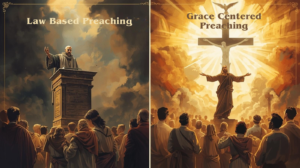
We preach “do this and live” when the gospel declares “live, and you will do this.” We exhort congregations to try harder when Scripture reveals they need to trust deeper.